CAMBODIA, A LOOK TOWARDS CHANGE
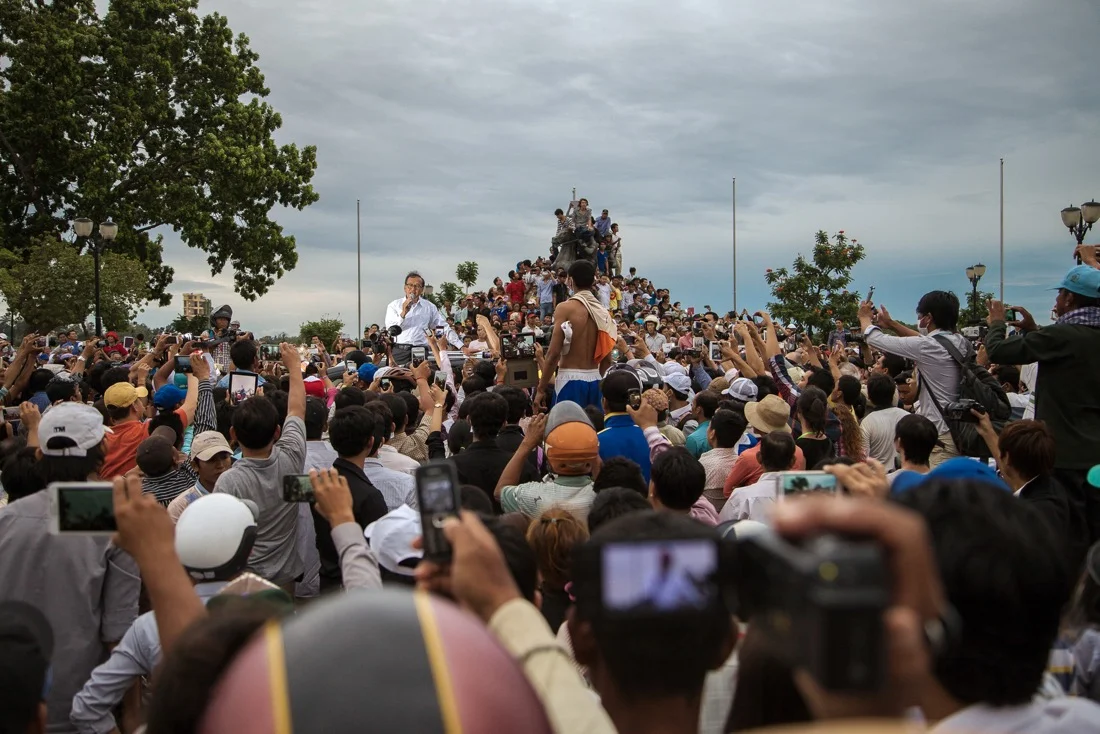
After a year of political deadlock and social unrest, Cambodia’s opposition Cambodian National Rescue Party (CNRP) announced it would finally take its seats in the National Assembly. The CNRP—at the time the country’s only significant opposition force to Prime Minister Hun Sen’s long-ruling Cambodian People’s Party—had boycotted parliament in protest over alleged irregularities in the 2013 election results.
For the first time in Hun Sen’s three-decade rule, the CNRP’s energized base posed a credible challenge to his grip on power. Although unprecedented numbers of Cambodians voted for the opposition, Hun Sen was declared the winner when the ballots were counted. The CNRP rejected the outcome and called for mass demonstrations, sparking months of street protests that drew hundreds of thousands.
After allowing the movement to build through much of the year, the authorities launched a violent crackdown in early 2014, killing at least four people and imposing a ban on public demonstrations. Tensions escalated further in July 2014 with the arrest of seven opposition lawmakers. The sustained pressure—combined with the government’s aggressive repression—ultimately pushed the CNRP to fast-track negotiations and take its seats in parliament.
Marked by at least seven deaths, dozens of arrests, and hundreds of injuries, Cambodia’s post-election crisis became one of the country’s most violent periods of the decade.
Some of these photographs have been featured in international outlets including The New York Times, TIME, The Wall Street Journal, Al Jazeera, Le Monde, The Guardian, and Vice.